
The Saree Gown is a revolutionary fashion statement that combines the elegance of the traditional Indian saree with the contemporary appeal of a gown. Designed for modern women who want to embrace heritage while enjoying comfort and ease of movement, the saree gown has become a go-to outfit for weddings, parties, and formal events.
One-piece design: No need for separate petticoats and blouses.
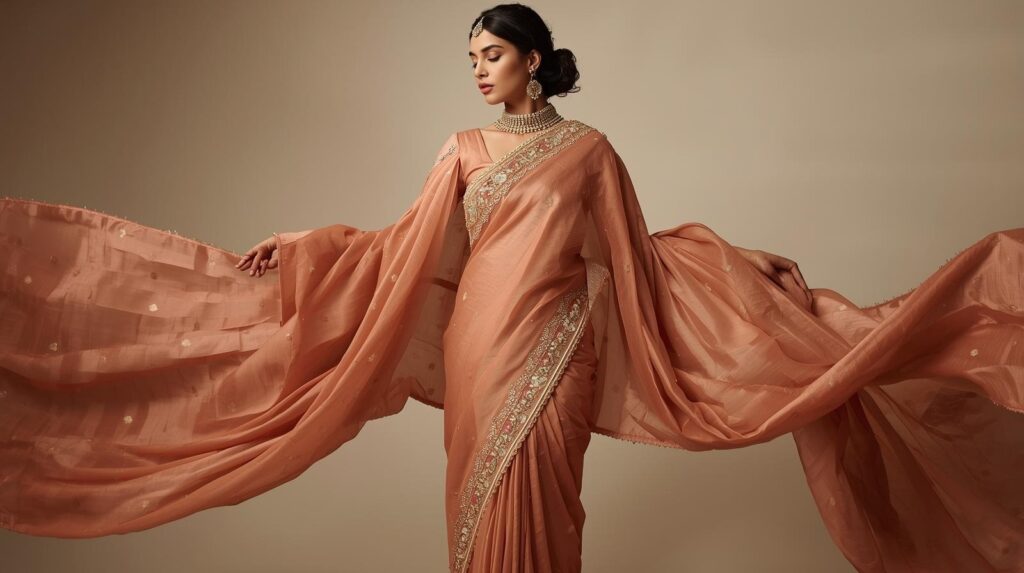
Flowing drape: Imitates the graceful fall of a saree pallu.
Gown silhouette: Can be mermaid-style, A-line, or straight cut, providing a modern and elegant structure.
Versatile fabrics: Often crafted in silk, chiffon, georgette, or net for comfort and sophistication.
The Origin and Evolution
The saree gown emerged in the last decade as a response to the increasing demand for fusion wear in India. Designers wanted to merge traditional attire with global fashion trends, offering a practical alternative to the conventional saree without compromising on grace. Celebrities and fashion influencers quickly popularized it, making it a must-have for red-carpet events and high-profile weddings.d-carpet events and high-profile weddings.
Why the Saree Gown is Popular
- Ease of Wearing
Traditional sarees can be challenging for beginners or for events requiring long hours of wear. A saree gown removes the hassle of draping, pleating, and constant adjustment, making it highly convenient. - Flattering Silhouette
With its gown-like structure, the saree gown enhances body contours while maintaining the elegance of traditional drapes. - Versatile Styling
It can be worn in various ways:
- Mermaid fit for a chic, body-hugging look.
- A-line for a flowy, princess-like appearance.
- Straight cut for a minimalist, modern vibe.
- Wide Audience Appeal
From brides and bridesmaids to fashion-forward working women, the saree gown suits multiple age groups and occasions.
Design Elements and Fabrics
- Fabrics: Silk, chiffon, georgette, satin, net, and velvet are popular choices.
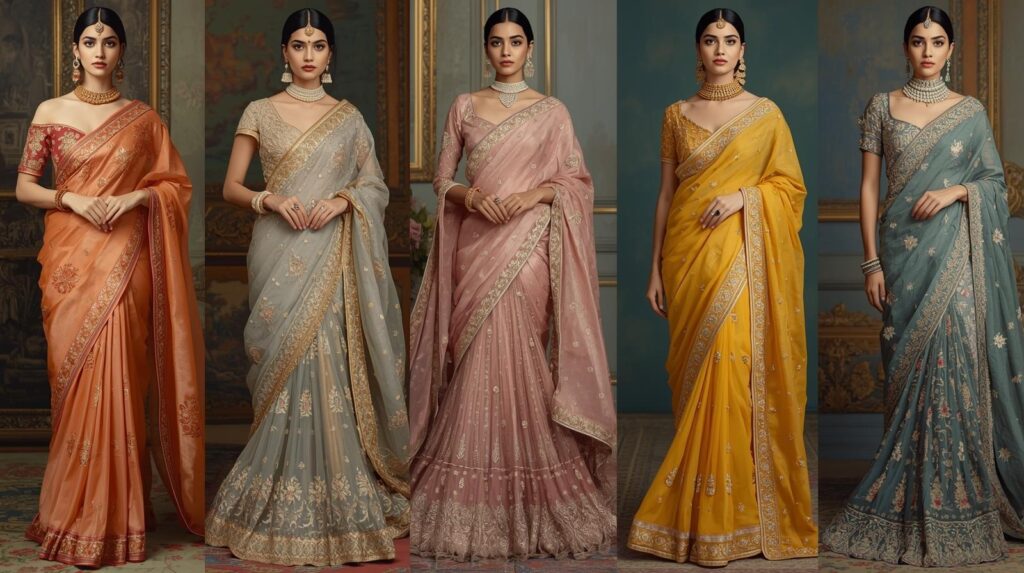
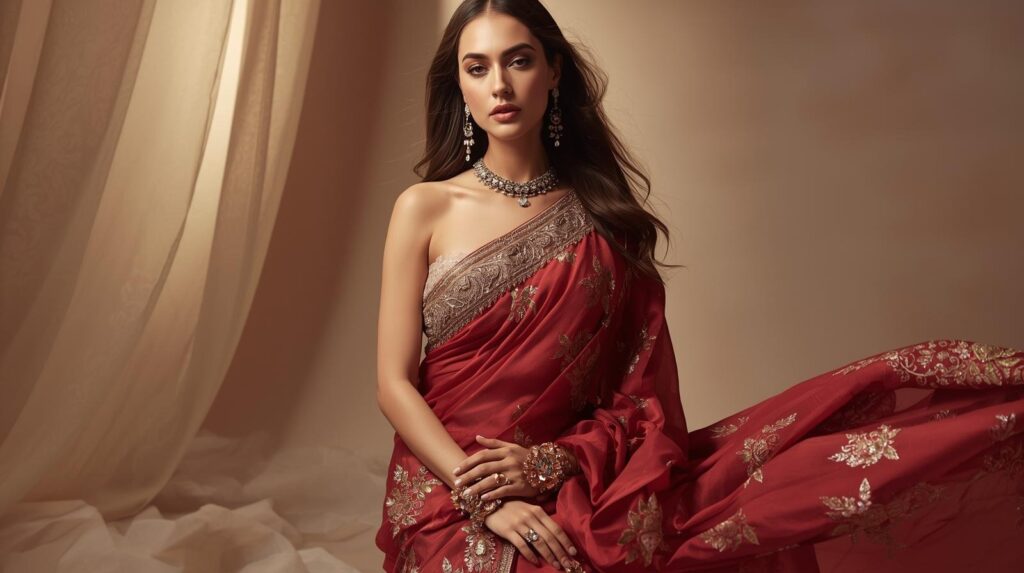
- Embroidery: Zardosi, sequins, beads, and threadwork elevate the gown’s elegance.
- Color Palette: Ranges from pastel shades for daytime events to bold jewel tones and metallics for evening occasions.
- Necklines and Sleeves: Options include off-shoulder, halter, V-neck, full sleeves, or sleeveless designs.
- Pallu Draping: Some saree gowns mimic the pallu drape with stitched pleats or flowing panels, creating a dynamic and graceful look.
Styling Tips for Saree Gowns
- Pair with statement jewelry like chandelier earrings, cuffs, or delicate necklaces.
- Footwear: Heels enhance the gown’s length and elegance.
- Hairstyles: Soft curls, buns, or sleek ponytails complement the modern-traditional fusion.
- Accessories: Clutches, embellished belts, or stoles can add glamour and personalization.
Celebrity Influence and Fashion Trends
Bollywood and Indian fashion influencers have played a pivotal role in popularizing the saree gown. Actresses like Deepika Padukone, Kareena Kapoor, and Sonam Kapoor have been seen wearing designer saree gowns at premieres and weddings, giving this style a global spotlight. Fashion designers across India, such as Sabyasachi, Anita Dongre, and Manish Malhotra, have also redefined the saree gown with intricate embroidery, luxurious fabrics, and bold designs.
Conclusion
The saree gown is more than just a piece of clothing—it is a celebration of tradition meeting modernity. Combining the elegance of the classic saree with the convenience and sophistication of a gown, it allows women to embrace cultural heritage while enjoying comfort and ease of movement. Perfect for weddings, parties, festivals, and red-carpet events, the saree gown suits every occasion and every body type.